
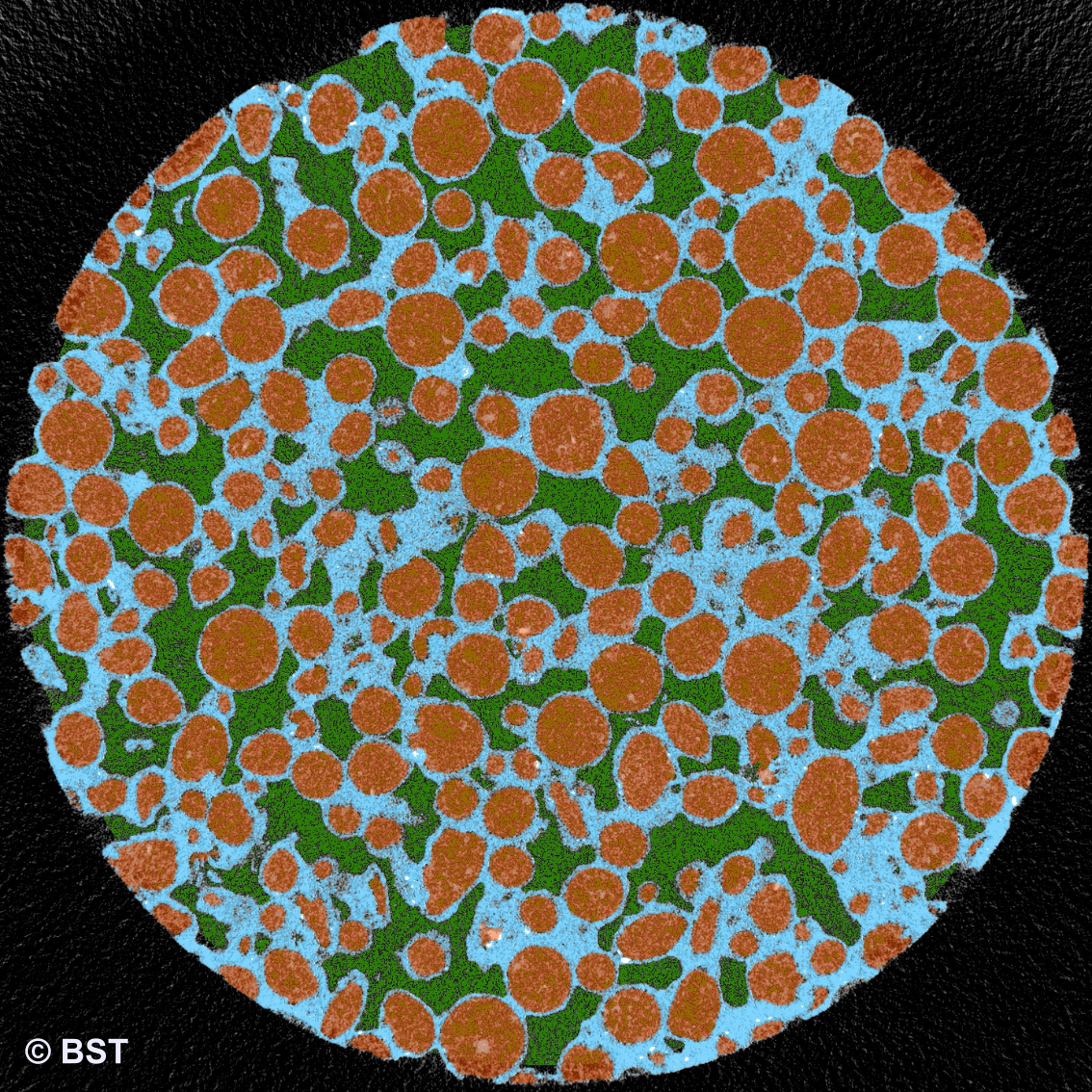
In concrete noise barriers (LSW) with a monolithically bonded facing layer made of lightweight aggregate concrete (LAC) and a structurally dense reinforced concrete core, various forms of damage were observed, ranging from cracking, surface weathering, and spalling within the LAC facing to localized bond failure with partial detachment and falling of the facing.
The objective of the research project was the systematic analysis of these causes of damage and damage development mechanisms, taking into account structural, hygrometric, thermal, and material-technological influencing factors. To this end, representative LSW structures were evaluated through structural diagnostics, and material-technological investigations were conducted on the microstructure, water absorption, water retention, and frost-deicing salt resistance of the LAC.
Based on the findings from this damage cause analysis, concrete structural, operational, and material-technological measures were ultimately derived to reliably ensure the durability and quality-assured construction of concrete LSW with an LAC facing.
The figure illustrates the segmentation of an LAC sample that was scanned at high resolution using micro-computed tomography (Micro-CT) to precisely visualize and quantitatively evaluate the spatial distribution of the aggregate pores.
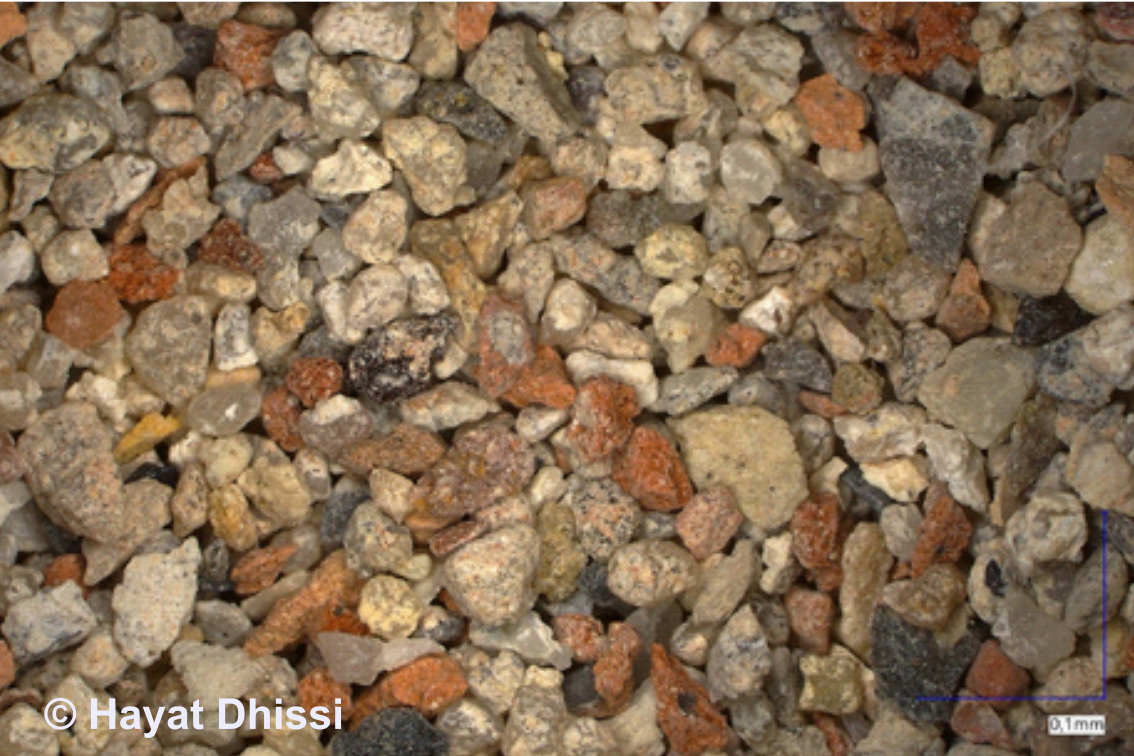
Fine recycled aggregate, or RC crushed sand, is produced during the demolition of concrete and masonry structures and consists of grain sizes under 2 mm. In Germany, regulations prohibit the reuse of recycled aggregate (< 2 mm grain size) in concrete.
Instead, it is disposed of in landfills as mineral construction waste or, in some cases, reused in cement production.
Given the very large quantities of such fine crushed sand generated, additional application possibilities must be developed to reintroduce it into the material cycle.
The fluctuating and inconsistent quality of RC crushed sand is the main reason for the current application restrictions in practice. These include inherent foreign substances and contaminants (chlorides, sulfates, organic matter) as well as cement paste adhesion, which have negative effects on the properties of fresh and hardened concrete.
Therefore, the reuse of RC aggregate requires adequate characterization, which Mr. Cömert addressed in his bachelor’s thesis. The accompanying image illustrates the material heterogeneity of construction waste crushed sand.
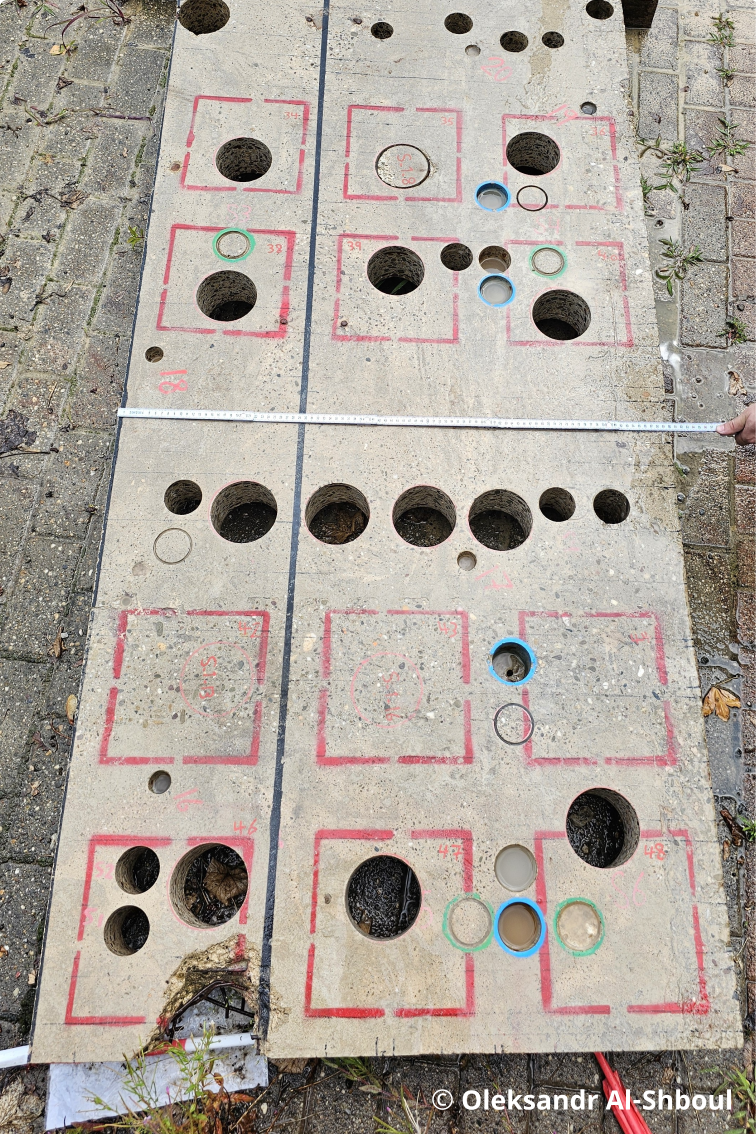
The reuse of old reinforced structural member requires an adequate characterisation from the load-bearing and durability perspectives. This is what Oleksandr Al-Shboul is doing within his Project B02 as part of the CRC 1683. The question is: can we fully characterize the elements based solely on near-surface non-destructive measurements?
This is what he is going to find out by combining different test methodologies and carrying out a deep data analysis based on machine learning.
This question also requires a proper validation based on direct, destructive measurements. This is why the element looks like a mine field: hundreds of core drills were extracted from different old elements originating from a source building demolished in 2022 in the RUB campus.
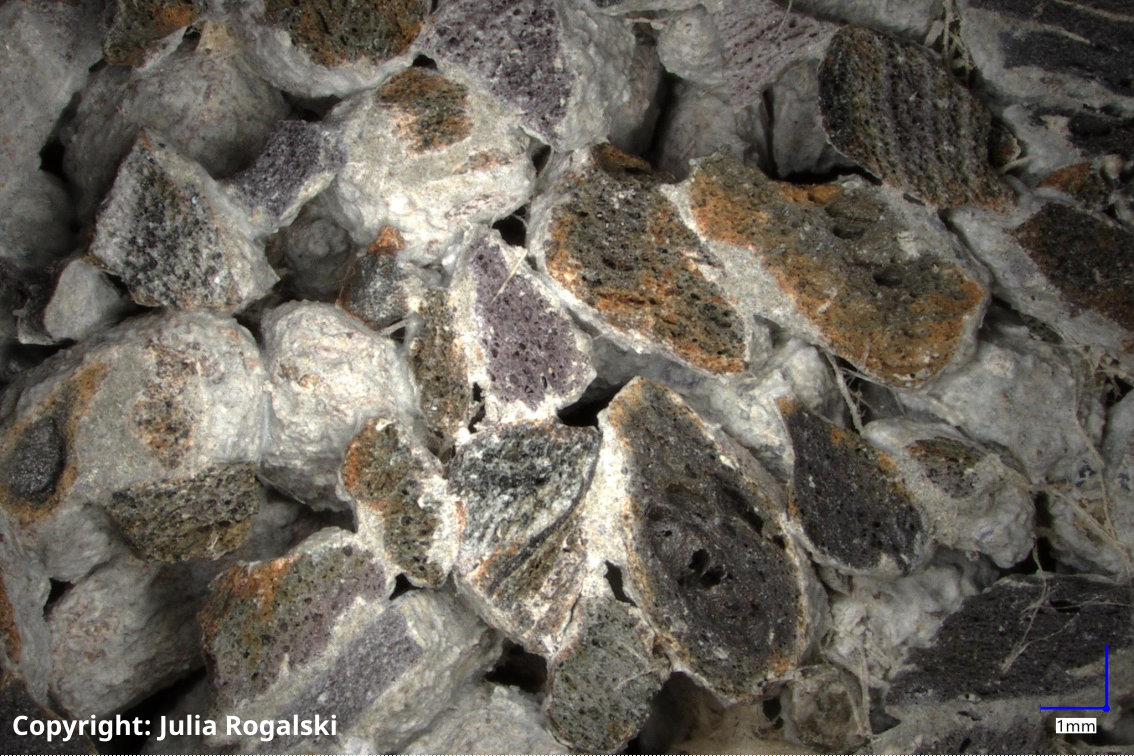
The figure is taken from Julia Rogalski’s bachelor’s thesis titled “Experimental Investigations into Material Degradation and Microstructure of Aggregate-Porous Lightweight Concrete and Its Raw Materials” at the Chair of Construction Materials, in which experimental studies on the frost-de-icing salt resistance of aggregate-porous lightweight concrete were conducted. The image shows the microstructure of an aggregate-porous lightweight concrete containing expanded shale, captured using a light microscope at 20x magnification.
Copyright © baustoffe 2026
Last update: May 20, 2026
